Skip to content


Guideline 5 – using multiple cases

Helping people learn via examples is a basic tenet of most instructional design. Abstract concepts become concrete through example.

Building on the idea of learning through examples, if you provide multiple examples to people learning a new idea, it usually leads to a better understanding of how the abstracted concept was derived. Thus the abstracted concept, or theory is just a way of explaining why the world works as it does.

Perceiving what to perceive: contrasting cases

However, when an individual is new to a domain, how they know what to look for? How do the know what is important? What is relevant to notice? This is where the design idea of contrasting cases comes to bear. Learners are given an example, then asked to derive an explanation of a pattern or what they see in front of them. Then they are given another example — a contrasting case — which is significantly different from the prior case or example. The learner then has to explain both cases. They have to create a model that can encompass both examples.

What the learner is doing is perceiving salient differences through multiple contrasting cases. Or as Daniel Schwartz & John Bransford write an article in 1998 called A Time for Telling: “analyzing contrasting cases can help learners generate the differentiated knowledge structures that enable them to understand a text deeply.” By learning how to perceive salient differences through multiple contrasting cases, and by creating new schema or mental models from learners’ own experience, learners created their own base of knowledge from which to further understand a concept.

A time for telling

After deeply engaging with material through contrasting cases, the learners are then more prepared to receive a lecture on the subject. “Noticing the distinctions between contrasting cases creates a ‘time for telling’; learners are prepared to be told the significance of the distinctions they have discovered” (Schwartz & Bransford.)

Analogies: a special kind of case
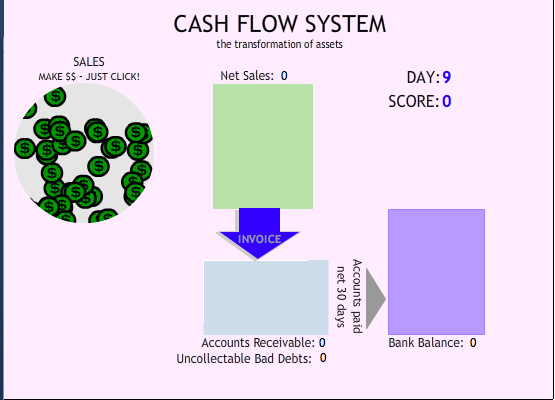
Cash FlowLikewise, having multiple, appropriate analogies or examples helps learners incrementally develop increasingly abstract schemas, especially if they are able to apply it to problem soon after learning. An analogy is a particular type of case that compares a concept familiar to a learner (the source) to an unfamiliar concept (a target). For example, comparing a plumbing system to the concept of cash flow, drawing a relationship between cash and the flow of water, between leaks and the loss of cash through bad accounts and interest. Based on this comparison, learners draw inferences about a target that deepens or elaborates their understanding.

Analogies are powerful tools for helping learners understand a new domain. The challenge is choosing an analogy that maps not just surface elements but that also maps relationships between the elements. For example, in the cash flow/plumbing system analogy, a hot water tank could be analogous to accounts receivable, a place where sales/incoming water is held before being transformed into cash bank balance/or hot water for the house. Even in this example, the analogy is a bit strained as water does not fully capture the transformation of cash as an asset as it moves through the system.

Analogical reasoning also depends on some prior knowledge of the source. However, even if the source is not completely understood by the learner it can still be helpful in learning. It is the comparison of the two cases, the source and the target, and examining their similarities that facilitates the creation of abstract concepts and schema.

Posted in guidelines, instructional design.

Tagged with , , , .


Playing with Prezi

I came across Prezi recently – a different type of presentation tool  that breaks the Powerpoint mold. I just loved it. It moves away from Powerpoint metaphor of slides and  page turning. Prezi is more like an whiteboard where you can move from concept to concept. You can embed media (images, videos, etc.) You can zoom in on concepts and between concepts, recording the “path” of your presentation. It gives new life to presenting ideas. Great for explaining complex graphics or models. As n experiment, I took a presentation that I had created called “There’s already an e in Learning” and moved it onto Prezi – much more fun. Here is it below.

To load – click the Play arrow. Once it loads > click More then Autoplay. Or to step through it at your own pace,  just click the Play arrow.

Try Prezi out for yourself at http://prezi.com – it’s fun and easy to ease. Now I just have to find something else to Prezi…..hmmmm.  I could imagine doing a family tree with historical pictures in this way. Still figuring out the publishing options.

Posted in tools.

Tagged with , , , , .


Social Games Night

December 4, 2009 – Attended to the Social Games Night co-sponsored by Silicon Valley IGDA and BASES (Business Association of Stanford Entrepreneurial Students), held on Stanford Campus. There were two excellent, and very different speakers on creating social games. Dave Castelnuovo spoke about his process of becoming a game developer and creating iPhone apps; Steve Meretzky spoke about the constraints and dynamics of developing for social game platforms.

  • Steve MeretzkyVP of Game Design at Playdom
    funny, very experienced and knowledgeable game designer, now designing Social Games
  • Dave Castelnuovoof Pocket God (Game), cofounder at Bolt Interactive
    one of the first entrepeneurs to successfully lead the charge into iPhone Games, very funny

Notes from the meeting:

Dave Castelnuovo:

  • Created an app game called Pocket God where you help pygmaies get off the island, but can also do ultimate evil to them.
  • Talked about and how he got started in games — long hours working on other projects, as an employee, then as independent contractor. Really wanted to get on the iPhone bandwagon.
  • Used the idea of sprint projects, setting himself goals to create a usuable game/app within 10hrs and just get it out the door. Create a prototype. Get things done in a set amount of time. A way to focus yourself when life keeps distracting you.
  • Created app game with co-worker. Many updates, done weekly, quick turnaround, to add features to the game.
  • Early on noticed that his game was mentioned on TouchArcade – a community/reivew site. Starting interacting with the community reviewing his project. Built trust. Recommends toucharcade.com as a place to get feedback.
  • The key is to build grassroots, build slow and steady, then go for eyeballs and ramp up.
  • His first game had 150 downloads per day, 2nd game 2 or 3, Pocket God – ramped up to millions. The key is to interact with your community.
  • Chose your category on the app store carefully. Simulation is a category where its easier to stay at the top. What categories you choose is key.
  • Apple used to take 3 days to approve and app. Now approval time is up to 3 weeks. if you posted updates frequently, it would push your app to the top. No more.

Castelnuovo was a wonderful, self-deprecating storyteller. He left me feeling that I too, could design games, given enough chutzpah and willingness to give up sleep.

Steve Meretzky:

  • Presentation on the ABCs of social games.
  • Great intro of Steve Meretzky, sounds like a great guy.. and fun.
  • Who knew Stanford had a game industry archive? Steve donated to it when he moved from MA to a much smaller house

Presentation Notes:

  • Social games are different from traditional games in that:
    • can be cooperative or competitive
    • have content that changes over time
    • have potential for negative behavior
    • they are easy to get into –> start simple and reveal depth over time.
  • Design and business of social games is intermixed — cannot have one without the other.
    • Virality and monetization.
    • Goals of virality
      • Once you start the game/install game, the designer must get you to come back to game.
      • What you want to do and what terms of service (TOS) of the platform allows (Facebook, MySpace, iPhone App Store platforms)
      • The overlap of TOS and what you want is the what you end up doing. Developers however, are constantly pushing the boundaries of the TOS, and the rules of what is allowed is constantly changing..
    • Viral tools
      • Invites
        • Negatives – they require action on part of the user, TOS have limited number of invites that can go out
        • Positives – they are persistent in the user’s inbox.
      • Wallposts
        • are bragworthy
        • high profile
        • can disappear in a user’s stream rather quickly
      • Notification channels
        • Negatives – require action on part of user (click to activate the Notification window).
        • Positives — once they are there, they are paying attention
  • New changes afoot in Facebook
    • Notifications changing (easier to see access), number of invites allowed changing, new scores/points/post? from game will be allowed.
  • New viral strategies
    • join my mob
    • beat my score
    • let’s exchange gifts
    • Wish list
    • Be my employee (playfish started this with restaurant)
  • The key to Monetization starts with engagement
  • Games have a longer form (arch), they allow you to build a presence over time.
    • Bejeweled, which has 4 mil players, is unable to monetize because it’s game arch is limited, does not allow building of engagement over time. They don’t know how to make $$ with their fan base.
  • Key monetization comes from
    • Re-engagement strategies
      • …. harvesting fields..
      • collect $ (mobster),
      • daily login rewards.
      • Taking care of employees (who are your social network friends)
      • taking care of pets.
      • Someone beat high score.
    • Monetization strategies – selling:
      • virtual goods (major $$ strategy)
      • premium virtual goods for rare items and that also have in game use
      • accessories for avatar customization,
      • buying stuff for your pet
      • content — charge for premium content
      • mini-games within a game (i.e. within sorority game)
  • Themes within social games.
    • What’s not working is what works in non-social gaming before (FPS, Fantasy, Sci-Fi)
    • Real world settings work (Mobster, Sorority, Farmville, Restaurant, etc.)
    • This is now the mass market games… based on RL
  • The future….
    • more social synchronous game time
    • personal profiles play into game more
    • your social graphs – who you interact with, how, etc.
    • cyber-expression of selves in the social world

Meretzky had a good perspective on what works in social games. He was also very clear that the rules keep changing. Excellent presentation.

Posted in games, social media.

Tagged with , , .