Skip to content


Guideline 3: Less is More

If you follow just one guideline, follow just this one: Less is More!

  • Keep it simple
  • Remove extraneous detail
  • Pare the learning down to essential components
  • Clearly explain how these components relate to one another
  • Help learners focus on what’s important.

The capacity for the brain to hold new information is limited.

  • By the capacity of working memory (sometimes called short-term memory)
  • By the how complex the material is to the learner

So, when learning try to communicate new knowledge:

  • no more then 2-4 elements at a given time (i.e. per slide)
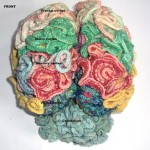
Knitted Brain

Knitted Brain

Some background information and research in case you want to know:

  • When introducing new knowledge, the constraints of working memory limit how much information can be processed in a given time frame. Miller, 1950’s discovered the rule of 7 — no more than 7 items could be kept active in short term memory.
  • However, when you’re trying to understand something, relate components of an concept, compare and contrast, then you want no more than 2-4 elements in working memory. (Sweller’s cognitive load theory).
  • Interference  can limit recall of information. Recall is worse the more facts you learn about a concept. Interference literally knocks the old information out of your brain when attaching new facts to a concept, if the facts have no intrinsic relationship to each other. It interferes when the memory one is trying to create. This is why extraneous information is often not advised. (Anderson, 2006).
  • Fan effects – the more facts or links associated with a concept, the longer it will take to recall any one fact.
  • Redundancy effects, as opposed to interference,  can help with recall. Especially when the pieces are linked appropriately.
    • Example of irrelevant facts that INTERFERE:
      • Locke was unhappy as a student at Westminster.
      • Locke felt fruits were unwholesome for children.
    • Example 2 of REDUNDANT facts that help in recall.
      • Mozart made a long journey from Munich to Paris.
      • Mozart was intrigued by musical developments coming out of Paris.
  • People use redundant facts to infer the target concept.

For more information, read up on Sweller’s cognitive load theory, and Mayer’s theory of Multimedia Learning.

Posted in guidelines.

Tagged with , , , .


Guideline 2: How you frame a problem matters

The framework used to introduce a novel problem may strongly influence what learners understand and how they reason about possible solutions. How you represent a problem to learners affects the what kinds of solutions they will seek. It affects the nature of a problem space.

Example: Ways of framing a problem (from IDEO – The Art of Innovation book p.57):

  • Spill-proof coffee cup lids – to narrow and assumes an answer
  • Bicycle cup holders – too dry and product focused
  • Helping bike commuters to drink coffee without spilling it or burning their tongues – GOOD framing – does not unduly limit the possible solutions
from christophniemann.com

from christophniemann.com

The cognitive concept of functional fixedness is about how we develop a narrow view of the objects and tools in our environment. The classic example of functional fixedness is the “candle problem” used by Duncker in a 1945 experiment (see Wikipedia). We create a tool for a specific purpose and we cannot see other purposes for the tool. Or as Marshall McLuhan observes (borrowed from Christopher D. Sessums blog.):

We shape our tools and thereafter our tools shape us – Marshall McLuhan

So when we encourage people to think outside the box to solve a problem, be aware of how you describe the box, and how you position all the things inside of the box.

Boxing in people – a story: I once suggested to a senior executive that our company only promotes people with MBAs or PhDs. He quickly reframed the issue and asked “Do we only promote people with advanced degrees or is there something about people who seek advanced degrees that get them promoted?” He succinctly reframed the issue from one of having the right credentials to an individual’s innate abilities, shifting the problem space from organizational issues to individual issues. Therefore, in seeking solutions, an individual looks within themselves rather than to the organization as a whole. (For the record, the answer pissed me off because I felt the shift in problem space at the time, although I could not articulate it.) As result, if one could not get promoted, it was because you could not demonstrate the abilities required — such as reframing your skills. Therefore, one becomes pigeon-holed.

How you frame a problem, and how you frame yourself, matters. Be aware of the box.

Posted in guidelines.

Tagged with , , , .


Social norms, expectations, attention, a game?

The ASTD Big Question for October is: What are the New Methods & Skills for Learners and Presenters in a multitasking world? Given that during a presentation, people are on their laptops, blackberries, iPhones – participating in social media, checking email or just doing something else – other than paying attention – what can we do as learners and presenters?

Initial thoughts:

  • Wireless communications have untethered our social norms
    • Sherry Turkle observed how we have become tethered to our virtual identities via cellphones and other devices.
    • What used to be considered rude – answering the phone while talking face-to-face with someone – is now the norm (in most of North America)
    • I don’t know what the social norms are in other countries/cultures.
    • Establish a new norm in your learning environment – via ground rules or other means. Discuss and create the norm up front.
      • Discuss how the backchannel can be used. What appropriate to say and not.
      • Give a list of web sites related to your topic for those who will want to surf the web (if laptops are allowed.) Have people surf in areas related to your topic.
  • Presenters need to change their expectations.
    • Don’t expect full attention – design with this in mind.
      • Tell the learners what to pay attention to – keywords
    • Expect the back-channel conversation – bring it to to the foreground occasionally during the presentation or have someone moderating it and bring it up. Give the audience the #hashtag so you can let them know that you  know and so that you can follow. Give them the venue for the backchannel.
    • Stop presenting – let the audience engage with each other, either face-to-face table talk or just via the backchannel.
    • Or if you want to be authoritative and have the power – ban latops and blackberries from the room. I’ve seen this done in corporate settings. But you know, people might resort to passing notes.
  • Partial-attention learners
    • Initial research into attention and performance showed that even when people are performing other tasks, they would still hear a message when primed to listen for a target word. (Treisman, 1964 Attenuation Theory). Does this mean we should be keying our learners for target words?
    • Perhaps as learners we should learn how to better target our attention and learn when to switch
    • Perhaps presenters should provide break points, pauses that allow for the swtiching.
  • Treat the presentation like a game
    • What if we were to treat the presentation like a game?
    • The presenter sets the rules – back-channel rules, front-channel rules
    • The presenter sets the goals – prize to indivdual or table group that can complete a task within a certain amount of time or that answers the quiz at the end.
    • Points for the best answer…
    • Have to think about this one more.

Just some initial thoughts on changing/setting expectations and skills we can learn and sharpen. The game has changed in intensity, lets change with it.

Addtional note (added later 10/14/09): there are two types of attention under current research: top-down attention (attending to a task such as looking for keys or listening to a presentation) & bottom-up attention (automatic attention to something salient or attention-grabbing, such as a fire-alarm or key words) . See full blog post from Scientific American: link.

Posted in ASTD big question.

Tagged with , , , , , .